Delhi Police Denies Permission for CJP’s October 10 Protest at Jantar Mantar; Saurav Das Questions Authority
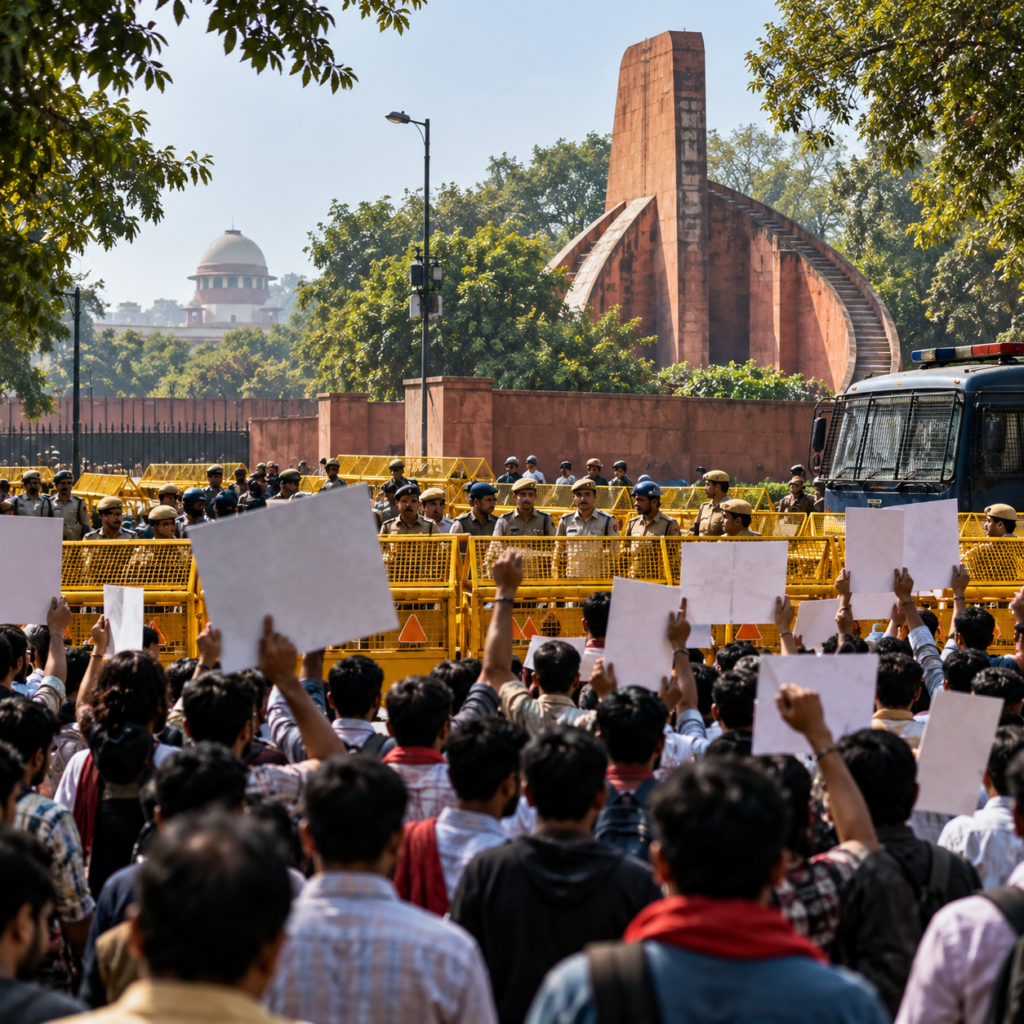
Delhi Police Denies Permission for CJP’s October 10 Protest at Jantar Mantar; Saurav Das Questions Authority
The proposed protest has brought the regulation of public demonstrations, police permissions and the constitutional right to peaceful assembly into focus. The dispute also raises questions about how authorities should balance public order with citizens’ right to express dissent.
New Delhi, October 9, 2026
The proposed October 10 protest by the Cockroach Janata Party (CJP) at Delhi’s Jantar Mantar has drawn attention after Delhi Police denied permission for the demonstration. CJP co-convenor and spokesperson Saurav Das has questioned the authority of the police to decide whether citizens can participate in a peaceful protest.
The proposed demonstration is linked to the party’s opposition to the Special Intensive Revision (SIR) exercise and its demand for the resignation of Chief Election Commissioner Gyanesh Kumar. The development comes amid heightened attention to electoral processes, public demonstrations and the legal limits on restrictions imposed by authorities.
According to reporting by The Times of India, Das submitted a formal notice to the police informing them about the planned protest. He said the party had informed the authorities in advance to avoid any subsequent dispute over whether the police had received notice of the demonstration. Police nevertheless denied permission for the proposed event.
The dispute raises a broader legal question: under what circumstances can authorities restrict a public demonstration, and what protections apply to peaceful assembly?
What Has Happened So Far?
CJP informed Delhi Police of its intention to hold a protest at Jantar Mantar on October 10. The party said it would cooperate with the authorities and expected the police to cooperate with the demonstrators.
However, police permission was denied. In response, Das publicly questioned the police appeal against participation and argued that citizens have a constitutionally protected right to demonstrate peacefully.
The proposed protest is part of the party’s campaign concerning the SIR exercise and the role of the Election Commission. The political demands made by the organisers should be distinguished from the separate legal question of whether the proposed demonstration can be restricted under applicable law.
As of October 9, the available reporting concerns the planned protest and the dispute over permission. The outcome of any subsequent gathering or police action should be reported only after it has been independently verified.
What Does the Constitution Say About Peaceful Protest?
Article 19(1)(a) of the Constitution of India guarantees citizens the right to freedom of speech and expression. Article 19(1)(b) protects the right to assemble peaceably and without arms.
These rights form an important part of democratic participation. Peaceful demonstrations allow people to express disagreement with government policies, seek accountability and bring public concerns to the attention of decision-makers.
However, the rights are not absolute. Article 19(2) permits reasonable restrictions on freedom of speech and expression on specified constitutional grounds. Article 19(3) permits reasonable restrictions on peaceful assembly in the interests of the sovereignty and integrity of India and public order.
Consequently, the existence of a constitutional right to protest does not automatically mean that every demonstration can take place at any location, at any time, without complying with lawful requirements.
At the same time, the power to regulate demonstrations is not unlimited. Any restriction must be assessed against the relevant legal provisions, the circumstances and the constitutional protections involved.
Does a Protest Always Require Police Permission?
The answer depends on the applicable legal framework, the location and the nature of the proposed gathering.
Authorities may regulate public assemblies to maintain traffic flow, protect public safety, prevent violence and manage competing uses of public spaces. Depending on the circumstances, the applicable rules may require prior permission, advance notice or compliance with specified conditions.
Jantar Mantar is a designated protest location in New Delhi, and demonstrations there may be subject to applicable administrative and police requirements.
A denial of permission, however, should not automatically be treated as proof that the proposed protest is unlawful. Its legality depends on the applicable rules and the grounds relied upon by the authorities. Likewise, a protest organiser’s assertion of a constitutional right does not, on its own, settle whether all relevant procedural requirements have been satisfied.
A proper legal assessment would examine the written decision, the reasons for refusal, the rules governing the venue and whether the restriction is consistent with constitutional standards.
Why Is the Issue Legally Significant?
The dispute highlights the balance between two legitimate concerns: protecting the right to peaceful political expression and maintaining public order.
If restrictions are imposed without adequate legal grounds, they may raise questions about the practical protection of fundamental rights. Conversely, authorities have responsibilities to prevent violence, safeguard the public and ensure that demonstrations do not unlawfully obstruct essential services or infringe the rights of others.
The legal position must therefore be assessed on the facts rather than on the identity or political views of the organisers.
For journalists and news publishers, this distinction is particularly important. Reporting that permission was denied is a verifiable description of an administrative development. Describing the decision as unconstitutional, arbitrary or unlawful would require additional evidence and, where relevant, legal analysis.
What Should Be Watched Next?
The immediate developments to watch are whether the organisers challenge the denial, whether authorities issue a written explanation and whether any further directions or conditions are communicated before the proposed date.
Any subsequent police action should be reported with reference to official statements, written orders or reliable independent reporting. Claims made by organisers or officials should be clearly attributed, particularly where they concern alleged misconduct or threats of arrest.
The dispute offers an opportunity to examine the constitutional framework governing public assemblies without assuming that either the organisers or the authorities are necessarily correct.
For now, the key issue is the legal basis for regulating the proposed demonstration and how that decision fits within the constitutional protection of peaceful assembly.
Legal takeaway: The right to peaceful assembly is constitutionally protected, but it remains subject to reasonable restrictions permitted by the Constitution. Whether a particular denial of permission is lawful depends on the applicable rules, the reasons for the decision and the circumstances of the case.
Sources: The Times of India, reporting on the proposed October 10 protest and denial of permission; Moneycontrol, reporting on Saurav Das’s response to the police appeal. Readers should consult any official police order or subsequent court proceedings before drawing conclusions about the legality of the decision.
Disclaimer: This report is for general legal information and news purposes. It does not constitute legal advice.